
The dairy industry today faces a twofold challenge: maintaining the economic viability of farms while reducing the use of chemical inputs, particularly antibiotics.
It was against this backdrop that the NEOLAC project was launched, a collaborative research program bringing together:
- Biodevas Laboratoires, a specialist in the formulation and manufacture of 100% natural phytogenic solutions (plant extracts) for agriculture,
- INRAE, the French National Institute for Agricultural, Food and Environmental Research,
- SODIAAL, France's leading dairy cooperative.
The project is supported by Bpifrance, the Pays de la Loire and Brittany regions, and Rennes Métropole.
The NEOLAC project was launched under experimental conditions in 2021 with a clear goal: to develop and scientifically validate natural alternatives to chemical inputs in dairy farming.
Targeting the three major diseases affecting dairy cows
The NEOLAC program targets the three most critical periods of the production cycle:
- Mastitis during lactation
- Mastitis at drying off
- Management of the peripartum period
These diseases are currently the leading causes of antibiotic use, representing a significant economic burden for livestock farmers and a major public health and environmental concern.
There are also insufficient scientifically validated alternatives available, which underscores the importance of a structured research program such as NEOLAC.
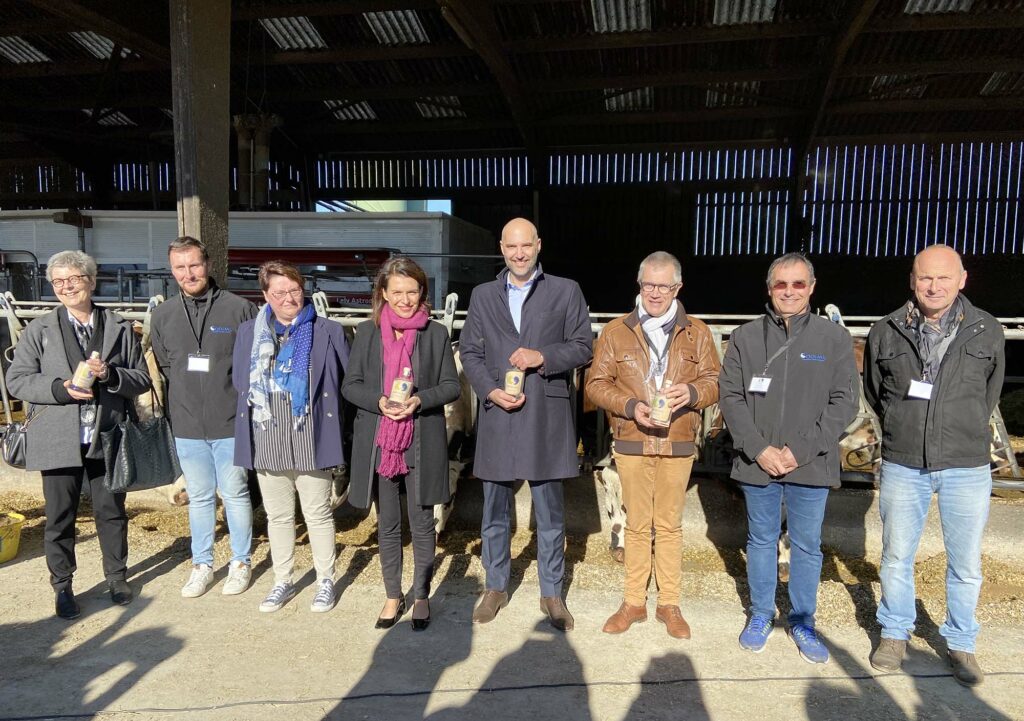
Among the solutions developed as part of the NEOLAC project, QUALIMILK—which focuses on udder health management during lactation—provides a concrete example of the practical applications resulting from this research:
A major research and development program
Launched for a four-year period, the NEOLAC project is based on a particularly ambitious experimental program.
The first trials were launched at an INRAE research station, including the launch of a study aimed at improving the immune status of dairy cows and reducing the incidence of mastitis during lactation.
This work was accompanied by the hiring of a doctoral student as part of a CIFRE thesis conducted in collaboration with INRAE Bretagne-Normandie and the development of new research methodologies.
At the same time, a large-scale field deployment was launched:
- More than 120 dairy farms have joined the initiative led by SODIAAL
- 12-month monitoring under actual production conditions
This dual approach (experimental and field-based) is a key component of the project’s scientific rigor.
Reduce the use of chemical inputs by 30 to 50 percent
One of NEOLAC’s primary goals is to significantly reduce the use of chemical inputs, particularly antibiotics.
The results show that it is possible to achieve a 30–50% reduction in chemical inputs, applicable to all livestock systems regardless of location, breed, production volume, and milking techniques.
These findings are consistent with the EcoAntibio plan and ANSES’s recommendations on the use of plants as alternatives to antibiotics.
Tangible economic benefits for livestock farmers
Beyond health concerns, NEOLAC also addresses the economic needs of farms.
Using our natural solutions allows you to:
- A reduction in treatment costs
- A reduction in the use of antibiotics
- An improvement in milk quality, enhancing its value
According to the project's findings, this could translate to an economic gain of between €300 and €3,700 per year for an average farm.
These gains help strengthen the economic viability of livestock farms, regardless of their production system (organic, conventional, or intensive).
A driver of competitiveness for the French dairy industry
Beyond the scope of its operations, NEOLAC is part of a broader effort to transform the dairy industry.
The project contributes to:
- Strengthening the competitiveness of the French industry
- Developing 100% French expertise
- Meeting consumer expectations regarding naturalness and sustainability
- Securing farmers' incomes
In this way, it helps build a more efficient, responsible, and resilient industry.
SPACE 2025: Presentation of Results and Outlook
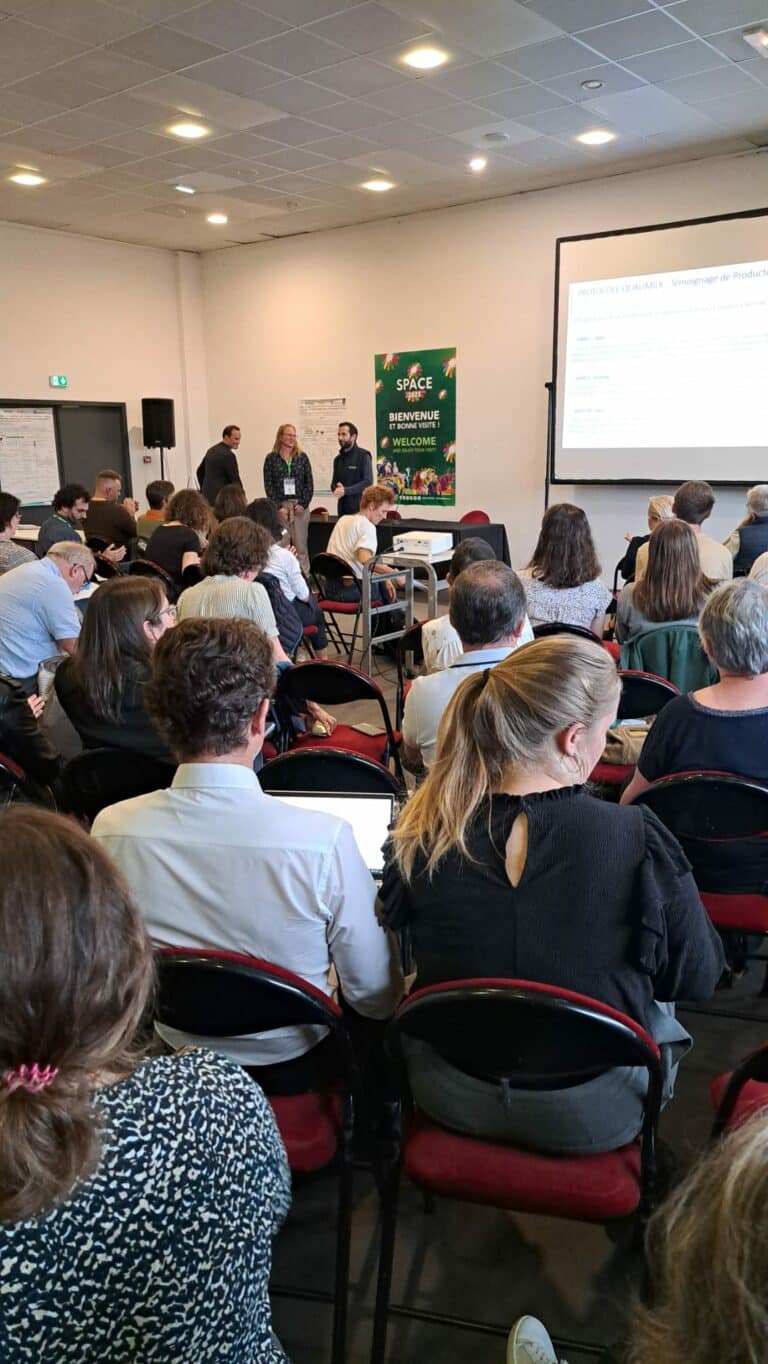
At the conclusion of the four-year pilot program, the results of the NEOLAC project were presented at SPACE 2025 in Rennes to journalists and key industry stakeholders.
This presentation marks a key milestone: the transition from a research program to concrete, validated solutions that can be implemented in livestock farming.
She also confirms:
- The effectiveness of natural solutions
- Their economic viability
- Their role in reducing antibiotic resistance
Conclusion
NEOLAC represents a major breakthrough in dairy farming today.
By combining scientific research, field testing, and innovation, the project demonstrates that it is possible to:
- Significantly reduce the use of antibiotics
- Improving animal health and welfare
- Improving the economic performance of farms
More broadly, it illustrates the key role of natural solutions in the transition toward more sustainable agriculture, in line with today’s environmental and societal challenges.
Would you like to learn more about the NEOLAC project or the solutions developed as part of it? Our teams are available to discuss your livestock farming challenges: