Grazing: a key period for parasite management
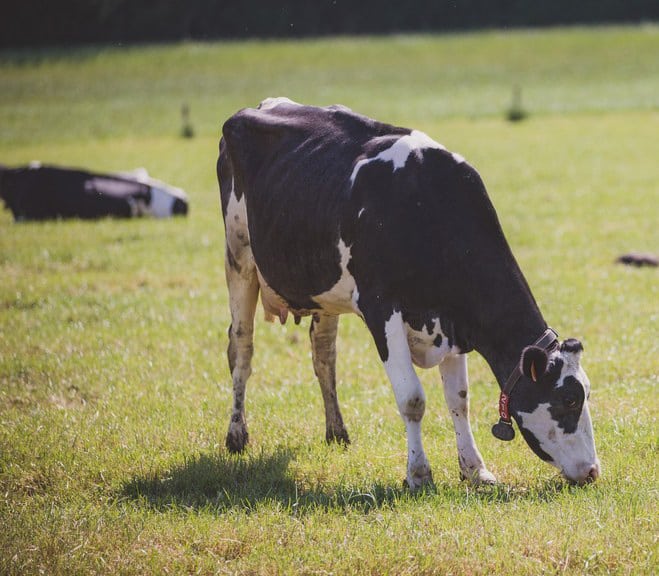
With the arrival of spring, cattle are put out to pasture, marking the start of the grazing season. This period is an important stage in herd management, but it also brings increased exposure to parasites in the environment.
When grazing, ruminants can come into contact with various parasites present in the soil, grass, or water. Their presence can have an impact on the health and performance of animals, including:
– Growth.
– Food efficiency.
– Milk production.
Parasites commonly found in livestock include gastrointestinal strongyles, flukes, and paramphistomes.
Paramphistomes: a parasite increasingly present in livestock farms
Among the internal parasites found in ruminants, paramphistomes are now becoming increasingly prevalent in livestock farms.
These parasites, which lodge in the rumen of animals, have been increasing in prevalence for several years. They are now being observed in a growing number of farms.
This trend can have significant zootechnical and economic repercussions for the farms concerned, particularly when parasite pressure becomes high.
Evolving management of parasitism
Internal parasite management has long relied primarily onthe use of conventional antiparasitic drugs.
While these solutions remain necessary in certain situations, their use today is part of a contextof rational use. Indeed, several factors are encouraging the livestock industry to consider complementary approaches:
– The emergence of resistance in certain parasites.
– Waiting periods related to drug treatments (milk or meat).
–The environmental impact of certain products.
– Societal expectations regarding the use of veterinary drugs.
In this context, farmers and technical advisors are gradually shifting toward strategies that combine different approaches to support animals facing parasite pressure.
PARASYNE a phytogenic solution to support internal parasite management
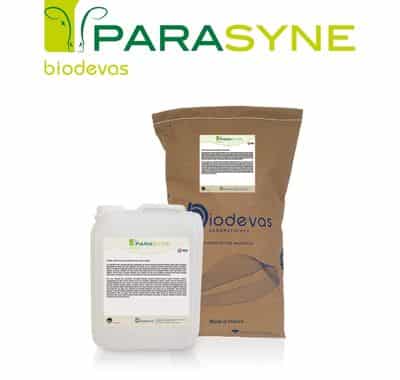
In this context, Biodevas Laboratoires PARASYNE, a nutritional solution that is part of an approach aimed at supporting animals facing the constraints associated with the presence of internal parasites.
Its formulation is based on a combinationof phytogenic active ingredients derived in particular from:
– Origanum sp.
– Sylibum sp.
– Thymus sp.
Theseplant extracts have been selected for their properties that contribute todigestive balance and animal robustness.
Its mode of action is based on a synergy of three complementary actions:
🛡️ Oxidative stress management:
The presence of internal parasites can cause physiological stress in animals. Certain plant-based active ingredients help support the body in these situations.
🌿 Changes in the digestive system:
The formulation helps to create and maintain a balanced digestive environment.
🧬 Supports natural defenses:
Certain plant compounds help support the animal's natural defense mechanisms.
This approach aims to maintain a level of parasite infestation that is compatible with zootechnical performance, while contributing to the rational management of internal parasitism.
Field observation results
Observations were made to assessthe benefits of using PARASYNE in livestock farms affected by internal parasitism.
These follow-ups made it possible to observe the evolution of various zootechnical parameters under real breeding conditions.
To view the detailed results of this study, please refer to the following article:https://www.biodevas.com/parasitisme-interne-vache/
A solution adapted to different farming systems
PARASYNE can be used in cattle, small ruminants, and horses.
The product can be used in organic or conventional farming and has no withdrawal period for milk or meat.
It is available in several forms of administration:
– Incorporation into feed.
– Incorporation into minerals.
– Distribution via drinking water.
– Top feeding.
A formula based mainly on European plants
Biodevas Laboratoires also Biodevas Laboratoires particular attention to the origin of the plants used in its formulations.
Today, nearly 80% of the plants used are of European origin, mainly French, thereby helping to limit the carbon footprint associated with sourcing.
Would you like to incorporate PARASYNE your breeding program?
Our technical teams support farmers and animal nutrition partners in implementing strategies tailored to farming systems and health issues.
Contact us to discuss your situation and obtain appropriate technical references.
FAQ – Internal Parasitism in Ruminants
What are the most common internal parasites in ruminants?
Ruminants can be exposed to various internal parasites while grazing. Among the most commonly encountered in livestock farming are gastrointestinal strongyles, flukes, and paramphistomes. Their presence depends in particular on climatic conditions, pasture management, and environmental parasite pressure.
Why are parasites more prevalent during the grazing period?
When grazing, animals can ingest parasite larvae present on grass or in water. Climatic conditions such as humidity and mild temperatures favor the development and survival of parasites in the environment.
What is paramphistome?
Paramphistome is a parasite that develops in the rumen of ruminants. Its presence is increasingly observed in livestock farms. Depending on the level of infestation, it can have an impact on animal performance.
How can internal parasitism in livestock farming be managed sustainably?
Parasitism management is generally based on a comprehensive approach combining several levers: pasture management, health monitoring, judicious use of antiparasitics, and nutritional support for animals.
In which livestock farms PARASYNE be used?
PARASYNE can be used in cattle, small ruminants, and horses, in organic or conventional farming. It can be administered via feed, minerals, drinking water, or top feeding, depending on farming practices.