Carrot cultivation is highly sensitive to weather conditions, which directly affect yield and quality. Carrot length, uniformity of size, internal and visual quality, and the absence of deformities, cracks, or spots: these factors directly determine the market value of the harvest.
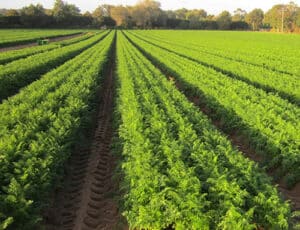
In major production areas, abiotic stresses such as water stress, sudden temperature fluctuations, or certain physiological imbalances can significantly impact crop development.
These constraints are reflected, in particular, in:
- Carrots that are shorter or of varying sizes
- Split or misshapen roots
- Spotted carrots
- Significant losses during sorting
- A decline in marketable yield
Drawing on Biodevas’ expertise, we offer several solutions made from100% natural plant extracts are used in carrot cultivation to support the plant throughout its life cycle and maximize its yield potential.
A mechanism of action that works at the heart of cellular function
The unique feature of Biodevas solutions lies in their physiological action, which targets cells directly.
The program focuses primarily on two complementary areas:
- Improving the plant's metabolic function
- Stimulation of antioxidant enzymatic activity (SOD, GPx, etc.)
This intracellular activity helps maintain more consistent physiological function, particularly under stressful conditions.
By supporting the management of oxidative stress, the program helps crops reach their full potential, even under challenging growing conditions.
A program to harness the genetic potential of the crop
In practice, this approach results in healthier crops and greater resilience to water, heat, and chemical stress.
Trials conducted over the past decade in various carrot-growing regions in France have shown that, at harvest time:
- A 10% to 20% increase in yield, particularly of marketable produce
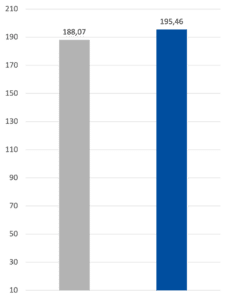
- An average 10% increase in the length of the cores
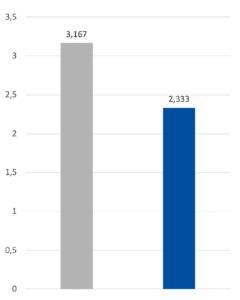
- A reduction in the waste rate
- Fewer carrots that are misshapen, split, or have visual defects
These results demonstrate the value of the Biodevas program in improving the technical and economic performance of the crop by aiming to produce longer, more uniform, and more marketable roots.
Results observed under real-world conditions
Field observations confirm the program’s effectiveness in promoting root development and improving root quality. The trials clearly demonstrate the differences between the control group and the Biodevas program, particularly in terms of uniformity, length, and market quality of the carrots.
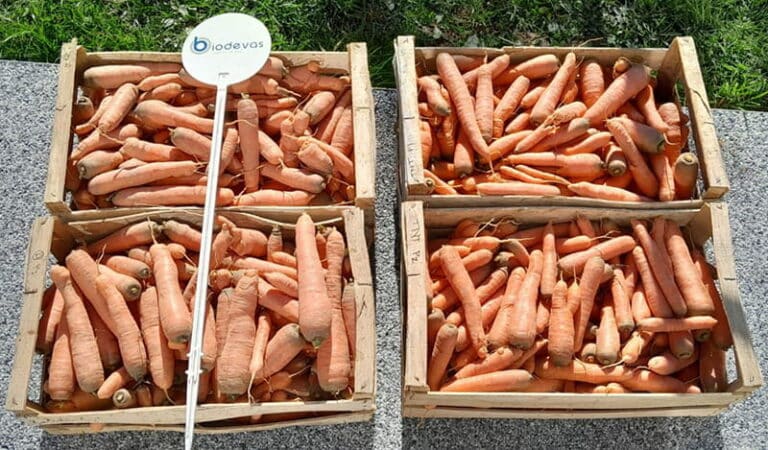
The Biodevas program serves as an agronomic tool to help growers improve carrot yield and quality.
By combining ACTIFOLIA, SURAFOLIA and VITAMIX, it influences the plant’s physiological functioning, oxidative stress management, and the regularity of root development. This approach helps produce longer, more uniform, and higher-value carrots, while reducing losses due to quality defects.
Would you like to learn more about the Biodevas carrot program?
Our teams can help you tailor the program to your production conditions, yield goals, and quality challenges.
FAQ – Carrot Cultivation: Yield, Quality, and End-of-Cycle Issues
How can you improve carrot marketable yield?
Marketable yield depends on consistent root development, uniform root size, the visual quality of the roots, and minimizing losses during sorting. Providing physiological support to the plant can help maximize the crop’s potential.
Why are some carrots misshapen or split?
Deformed or forked carrots can be caused by several factors: soil structure, water stress, physical obstacles, nutritional imbalances, or irregular growing conditions.
Why do carrots sometimes split?
Cracks may appear during growth spurts, often due to fluctuations in soil moisture, water stress, or a rapid resumption of growth following a period of stress.
What are the main health issues associated with late-season carrot crops?
Toward the end of the growing season, carrots may be affected by several diseases, such asAlternaria, cavity spot, or other diseases. Their impact depends on soil and climate conditions, disease pressure, the variety, and cultivation practices.
How can we minimize losses during core sorting?
Reducing sorting losses requires proper establishment, steady growth, appropriate irrigation management, effective stress management, and special attention to health issues toward the end of the growing cycle.