Biostimulants have become essential tools in modern agriculture for sustainable and resilient production.
They do not replace fertilizers or plant protection products, but stimulate the internal biological processes of plants, improving their growth, nutrition, and resistance to abiotic stress (Du Jardin, 2015).
As Zhang & Schmidt (2020) remind us, "biostimulants are defined by what they do, rather than by what they are". This functional definition illustrates the diversity of products grouped under this term: plant extracts, algae, humic acids, beneficial microorganisms... All share a common objective: to optimize plant physiological functions to enhance their performance and resilience.
This article provides an overview of the two main categories recognized today: organic biostimulants and microbial biostimulants.
What are the different categories of biostimulants?
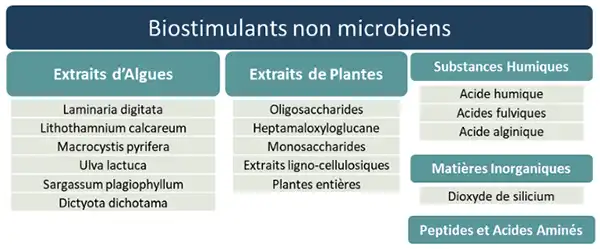
1. Organic Biostimulants: Plant and Algae Extracts, Humic Acids...
Organic (non-microbial) biostimulants are a group of natural substances from the plant or animal world, which act on plant physiology without directly supplying nutrients. Their effectiveness is based on a combination of mechanisms: hormonal modulation, enzymatic stimulation, improvement of metabolic processes and optimization of exchanges between roots and soil.
Plant extracts, for example, contain a wide variety of bioactive compounds such as oligosaccharides, polyphenols, and certain natural hormones, which are capable of activating signaling pathways and strengthening defenses against abiotic stress.
Heptamaloxyloglucan, a well-studied oligosaccharide, triggers the production of antioxidant enzymes and phytoalexins, helping to increase resistance to drought or extreme temperatures (Klarzynski et al., 2000). Polyphenols, meanwhile, play a central role in protecting cells against oxidative stress by neutralizing free radicals and stabilizing cell membranes (Ali et al., 2020).
Seaweed extracts are another major category of organic biostimulants. Rich in polysaccharides such as laminarin or fucoidan, amino acids and natural phytohormones, they help regulate stomatal opening, improve water balance and limit the deleterious effects of salinity and drought.
Numerous studies demonstrate their effectiveness in viticulture, arboriculture and market gardening, where they improve not only plant tolerance to stress, but also crop quality, with positive effects on sugar content, fruit firmness or post-harvest preservation (Battacharyya et al., 2015; Shukla et al., 2019).
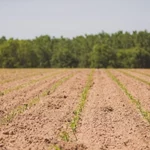
Humic and fulvic acids, derived from the natural decomposition of organic matter, act at the interface between soil and roots. They modify soil structure and porosity, promote beneficial microbial activity and improve the availability of nutrients, particularly phosphorus and micronutrients.
These substances also stimulate root growth by acting on pathways similar to those of auxins, contributing to better soil exploration and increased nutrient uptake (Canellas et al., 2015; Soil Science Society of America Journal, 2020).
Finally, protein hydrolysates, obtained by enzymatic, acid or thermal hydrolysis of plant or animal raw materials, provide plants with free amino acids and low molecular weight peptides.
These compounds are directly involved in stress protein synthesis, osmoregulation regulation and cell repair. They improve post-transplant growth recovery, support overall vigor and enhance resilience under limiting conditions, particularly during periods of drought (Ertani et al., 2009; Colla et al., 2017).
Taken together, these different types of organic biostimulants have a complementary action. They stimulate root growth, nutrient uptake, hormone regulation and antioxidant defense, while being biodegradable, compatible with organic farming and suitable for use on a wide range of crops.
2. Microbial biostimulants: Mycorrhizal fungi and beneficial bacteria
Microbial biostimulants include all living micro-organisms applied to plants or soils to directly or indirectly stimulate growth and stress tolerance.
They act primarily by colonizing the rhizosphere, the zone of interaction between roots, soil and microbiota, where they modify biological dynamics and enhance plants' ability to absorb nutrients and resist abiotic stresses. Among the most extensively studied are mycorrhizal fungi and certain beneficial bacteria known as growth-promoting rhizobacteria (PGPR).

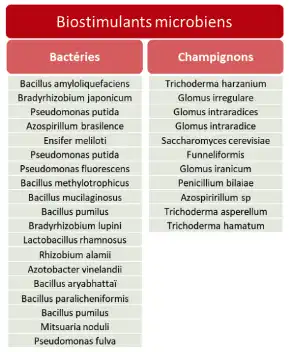
Mycorrhizal fungi, such as Glomus intraradices or Rhizophagus irregularis, establish a symbiotic relationship with roots. Their hyphae considerably extend the surface area explored by roots, facilitating the uptake of nutrients that are not easily mobile in the soil, such as phosphorus and certain trace elements (Smith & Read, 2008).
This symbiotic relationship also translates into improved tolerance to water and salt stress, as the mycorrhizal network improves water availability and promotes ionic stability within plant tissues. In addition, certain fungi such as Trichoderma spp. do more than simply improve nutrition: they also secrete compounds capable of inducing systemic defense mechanisms, strengthening the plant against soil-borne pathogens, while stimulating root growth and biomass (Harman et al., 2004).
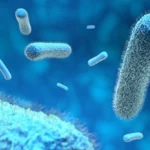
Beneficial bacteria are another major component of microbial biostimulants. Many PGPR species, such as Bacillus amyloliquefaciens, Pseudomonas putida, and Bradyrhizobium japonicum, have demonstrated their effectiveness in various crop contexts (Kloepper et al., 2004; Hungria & Mendes, 2015).
Their mode of action is multiple: some secrete natural phytohormones such as auxins, cytokinins or gibberellins, directly influencing root elongation and vigor of aerial parts; others produce enzymes or metabolites capable of solubilizing phosphorus or fixing atmospheric nitrogen, thereby increasing nutrient availability for plants. Some strains also possess ACC-deaminase activity, which reduces stress-induced ethylene production and thus delays tissue senescence (Backer et al., 2018).
However, the effectiveness of microbial biostimulants is highly dependent on environmental conditions. Soil humidity, temperature and pH, as well as the presence of an established microbiota, can influence the colonization and activity of inoculated strains.
Their success therefore relies on rigorous selection of the right micro-organisms for each crop and precise technical positioning, whether through seed coating, soil inoculation or fertigation application. Recent advances in biotechnology now make it possible to develop more stable and effective formulations, such as freeze-drying, micro-encapsulation or the synergistic combination of several microbial strains (Yakhin et al., 2017).
Microbial biostimulants thus represent a complementary approach to organic biostimulants. They not only reinforce nutrition, but also contribute to the establishment of a truly protective and functional root ecosystem, improving the plant's overall health and resilience in the face of environmental hazards.
Biostimulant manufacturing process
The manufacturing process for biostimulants is highly dependent on the nature of the raw materials used, but always meets the same objective: to preserve the integrity and efficacy of the bioactive compounds, while ensuring the stability and safe use of the end product. Generally speaking, manufacturers prefer to extract active fractions or select microbial strains rather than use raw biomass, in order to better control the quality and reproducibility of the effects observed in the field (Yakhin et al., 2017).
In the case of microbial biostimulants, production is based on culturing selected strains of bacteria or fungi under controlled conditions. These micro-organisms are then multiplied by fermentation, then stabilized by processes such as lyophilization, which preserves their viability and biological activity over a long storage period (Backer et al., 2018). During application, reactivation of the strains occurs on contact with water and soil organic matter, an essential condition for their effectiveness. Additional formulation steps, such as seed coating, micro-granulation or encapsulation, facilitate their integration into agricultural technical itineraries and guarantee optimal placement in the rhizosphere (Rouphael & Colla, 2020).
For non-microbial biostimulants, developed from plant or animal raw materials, several extraction and processing techniques are used to isolate the molecules of interest. Enzymatic extraction releases peptides and low-molecular-weight amino acids that are easily assimilated by plants and particularly effective in stimulating root growth (Ertani et al., 2009; Colla et al., 2017). Aqueous or thermal extraction, often used for algae, concentrates soluble polysaccharides such as laminarin or mannitol, known for their role in osmotic regulation and resistance to abiotic stress (Battacharyya et al., 2015). Acid or alkaline hydrolysis, meanwhile, is well suited to lignocellulosic materials, yielding oligosaccharides capable of inducing natural defense mechanisms (Klarzynski et al., 2000). Finally, solvent extraction can concentrate specific molecules such as polyphenols or natural phytohormones, while eliminating undesirable compounds (Shukla et al., 2019).
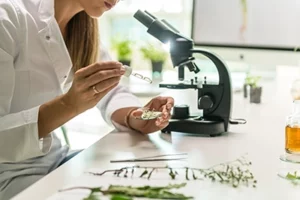
Beyond extraction, formulation technologies play a decisive role in the final effectiveness of biostimulants.
Microencapsulation, for example, protects active ingredients from degradation by light, oxidation or soil pH, and ensures gradual, targeted release in the root zone (Yakhin et al., 2017).
Other forms, such as concentrated liquid solutions, soluble powders, or granular formulations, allow products to be adapted to various modes of application and ensure better distribution homogeneity and increased bioavailability of bioactive compounds (Rouphael & Colla, 2020).
These manufacturing and formulation stages are decisive in ensuring the stability, safe use and consistent performance of biostimulants under sometimes highly variable agricultural conditions. They largely explain the differences observed between commercial products, and underline the importance of rigorous control of industrial processes.
Advantages and differences between types of biostimulants
Each category of biostimulant has its own specificities linked to its composition and mode of action, which explains why performance varies depending on the crop, environmental conditions and application strategy chosen.
Organic biostimulants act holistically on plant physiology, stimulating root growth, improving nutrient uptake and boosting overall vitality.
Plant extracts rich in polyphenols, amino acids or oligosaccharides, for example, enhance tolerance to abiotic stress, while humic acids improve soil fertility and root absorption capacity.
Their biodegradable nature and compatibility with organic farming make them particularly well-suited to agroecological systems. However, their action relies on complex, multifactorial mechanisms such as hormonal modulation, enzymatic activity or interactions with the soil, which explains why their effects are sometimes more gradual and less immediate. Their effectiveness is highly dependent on the quality and stability of the extracts, as well as on the time of application, which makes them more effective in medium-term preventive management than in emergency situations.
Microbial biostimulants, on the other hand, are distinguished by their direct action in the rhizosphere.
By colonizing the roots, beneficial micro-organisms such as Bacillus, Trichoderma or mycorrhizal fungi like Glomus interact intimately with the plant. They facilitate the uptake of key nutrients such as phosphorus, nitrogen and certain trace elements, while inducing systemic defense mechanisms that protect the plant against various stresses. Several studies have shown that these strains can deliver visible benefits from the very first weeks of application, including improved recovery after transplanting, accelerated root growth and reduced incidence of soil-borne pathogens. However, their effectiveness is highly dependent on environmental conditions: humidity, temperature, pH and initial soil microbial composition can strongly influence their ability to establish and express their potential. To guarantee good results, precise positioning in the technical itinerary, for example at sowing or seed coating, and in non-limiting conditions, is essential.
Conclusion
Biostimulants are now much more than just a category of complementary products: they are a real agronomic lever for meeting the demands of modern agriculture, which must be efficient, sustainable, and resilient. Whether organic or microbial in origin, their value lies in their ability to stimulate plants' internal mechanisms, strengthen their physiology, and improve their adaptation to environmental constraints. Organic biostimulants, derived from plant extracts, algae, humic acids, or hydrolyzed proteins, act in a comprehensive and progressive manner, modulating hormonal pathways, supporting mineral nutrition, and increasing stress tolerance. Microbial biostimulants, on the other hand, rely on the action of living microorganisms capable of colonizing the rhizosphere, promoting nutrient symbiosis, and inducing natural defenses, thus providing rapid and measurable benefits in the field.
The diversity of these products, both in terms of their origins and their modes of action, makes them complementary and strategic tools for improving crop vitality, stabilizing yields, and reducing dependence on chemical inputs. Nevertheless, their effectiveness depends heavily on the quality of the formulations, the timing of application, and soil and climate conditions. They must therefore be integrated into a rational approach to crop management, in line with the agronomic objectives of each farm.
With recent advances in biotechnology, bioactive compound extraction, and formulation, biostimulants are experiencing unprecedented innovation. They are set to play an increasingly important role in the agroecological transition, reconciling productivity with respect for ecosystems. Their development potential points to a future of agriculture that is more input-efficient, more resilient to climate hazards, and more oriented toward long-term sustainability.
In the next article in this series, we will explore plant-based biostimulants in more detail, including their specific mechanisms and practical applications in the field.
Any questions?Contact us, our team is here to help.
Disclaimer
The aim of this series is to share practical information on biostimulants. Each month, a new topic will be covered, based on our expertise and research.