European agriculture is undergoing profound change. With the Green Deal and the Farm to Fork strategy, the European Union has set ambitious targets: to reduce pesticide use by 50% and fertilizer use by 20% by 2030. These guidelines respond to major environmental and societal challenges, but they raise an essential question: how can crop yields and quality be maintained while reducing the use of chemical inputs?
In this context, biostimulants are emerging as a strategic lever. Unlike fertilizers or plant protection products, they do not directly provide nutrients or target pests. Their role is to activate the physiological and metabolic processes of plants in order to optimize the use of available resources and strengthen their resilience to abiotic stresses.
Reduced inputs thanks to biostimulants
Reducing the use of fertilizers and plant protection products without sacrificing performance relies on two complementary levers:
- better utilize the nutrients already present in the soil (use efficiency),
- better help the plant cope with stresses that disrupt its physiology and lead to curative interventions.
Biostimulants act precisely on these two levels.
Optimizing crop nutritional efficiency
One of the primary mechanisms of action of biostimulants involves improving nutrient utilization. They exert their effects at various levels: root system development, modification of rhizosphere chemistry, and facilitation of intracellular transport.
Protein hydrolysates, rich in amino acids and signal peptides, stimulate root architecture, activate key enzymes, and promote the expression of specific nitrogen and phosphorus transporters. This action results in better nitrogen assimilation and reduced nitrogen requirements. Colla et al. (2015) demonstrated their effectiveness under experimental conditions, and Calvo et al. (2014) confirmed in the field that a 20% reduction in nitrogen inputs could be achieved without any loss of yield.
Humic and fulvic acids provide an additional benefit. By modifying the chemistry of the rhizosphere (through complexation, increased cation exchange capacity, and micro-variations in pH), they promote the solubilization of phosphorus and trace elements. Their auxin-like effect also stimulates root growth, which often results in an increase in the number of fine roots and better mobilization of phosphorus that is difficult to access (Canellas et al., 2015).
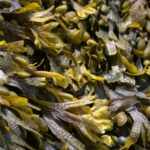
Plant and algae extracts also play an important role. As sources of polysaccharides (laminarin, fucoidan, mannitol), betaines, and natural phytohormones (auxins, cytokinins), they support cell division and elongation while optimizing the redistribution of nutrients to growing organs. Several studies confirm their effectiveness across a wide range of crops (Battacharyya et al., 2015; Rouphael & Colla, 2020).
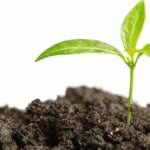
Finally, microbial biostimulants, whether PGPR (Plant Growth Promoting Rhizobacteria) or mycorrhizal fungi, complement these effects by acting directly in the rhizosphere. They solubilize phosphorus using phosphatases and organic acids, produce siderophores that facilitate iron acquisition, fix nitrogen in legumes (Rhizobium, Bradyrhizobium), and increase P absorption through the mycorrhizal network (Glomus). These benefits are well documented (Pii et al., 2015; Halpern et al., 2015).
In summary, by strengthening roots, making nutrients more available, and facilitating their transfer within the plant, biostimulants reduce the need for fertilizers while ensuring yields.
Strengthening resilience and reducing the use of pesticides
Another major benefit of biostimulants is their ability to increase crop resilience. A large proportion of curative treatments are used on plants weakened by abiotic stress: drought, heat, salinity, or excess water. By limiting these stresses, biostimulants indirectly reduce the need for plant protection products.
Plant and algae extracts rich in polyphenols activate antioxidant systems (SOD, CAT, APX), reduce lipid peroxidation, and stabilize membranes. Thanks to this action, photosynthesis and stomatal opening are better regulated in conditions of water deficit (Battacharyya et al., 2015; Rouphael & Colla, 2020).
Certain extracts and phytohormones, such as salicylates and brassinosteroids, promote the accumulation of proline and glycine betaine, key molecules for maintaining cell turgidity. They also facilitate a rapid recovery of metabolism after a period of stress (Ertani et al., 2018; Hayat et al., 2010).
Microorganisms, meanwhile, intervene on another level: hormonal modulation. Certain strains of PGPR produce ACC deaminase, an enzyme that reduces stress-related ethylene production and prolongs active growth (Glick, 2014). Others trigger ISR (Induced Systemic Resistance) via the jasmonate/ethylene pathways.
Agronomic consequence: plants that are better equipped to cope with the climate are also less vulnerable to pathogens, which limits the number and intensity of phytosanitary interventions required.
Concrete examples in the field
The effects of biostimulants are not limited to trials under controlled conditions: they are widely confirmed in the field, in a wide variety of sectors.
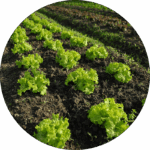
In market gardening, for example, the application of protein hydrolysates can reduce nitrogen inputs by 15 to 25 percent while maintaining crop yields and quality, as shown by Colla et al. (2017).
Algae extracts, rich in polysaccharides and natural phytohormones, are also notable for their ability to improve the size and dry matter content of vegetables, even under conditions of water stress (Battacharyya et al., 2015).

In viticulture, the use of plant extracts rich in polyphenols promotes greater uniformity in berries, increases the Brix degree, and helps reduce certain fungicide treatments when integrated into integrated pest management programs. These effects are well documented by Romanazzi et al. (2016). Laminarin, an oligosaccharide extracted from brown algae, has also been shown to be effective in strengthening the vine's defense responses to pathogens.
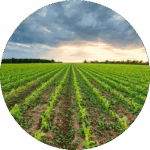
In field crops such as corn or cereals, the addition of humic acids strongly stimulates the root system. Canellas et al. (2015) observed up to 24% additional root biomass and an 18% reduction in yield losses under water stress. Plant growth-promoting bacteria (PGPR) complement these effects: they improve phosphorus uptake and strengthen crop resilience during dry periods, as demonstrated by Halpern et al. (2015).
Finally, in legumes, targeted inoculation with Bradyrhizobium or Rhizobium strains significantly improves symbiotic nitrogen fixation, reducing the need for mineral inputs. This effect is particularly valuable when anti-stress priming preserves nodulation during periods of extreme heat or drought, a phenomenon well described by Vessey (2003) and more recently confirmed by Pii et al. (2015).
Innovations in biostimulants: preparing for the future
Research into biostimulants is currently experiencing unprecedented growth. The challenge is no longer simply to offer natural solutions, but to make them more targeted, more stable, and more effective in increasingly complex agronomic contexts. Several areas of innovation stand out.
New formulations seek to improve the stability and bioavailability of active ingredients. Microencapsulation, for example, protects sensitive molecules, such as antioxidants or natural hormones, from light, oxidative, or enzymatic degradation, while ensuring gradual release in the rhizosphere (Pechaud et al., 2017). Nanotechnologies also open up new possibilities by allowing very low doses of biostimulants to be delivered directly to specific tissues, such as roots or leaves. Finally, seed coating is a particularly promising application: placed in direct contact with young roots, the biostimulant acts from the earliest stages of growth, improving vigor at emergence and promoting more uniform initial development (Bulgari et al., 2019).
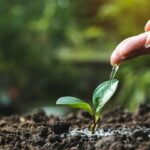
At the same time, combined biostimulants are the subject of extensive research. The combination of plant extracts and microorganisms appears to promote the establishment of mycorrhizal fungi and beneficial bacteria in the rhizosphere (Rouphael et al., 2021). These "multi-source" formulations combine several mechanisms: they simultaneously improve nutrition, stimulate antioxidant systems, strengthen rooting, and activate defenses. This synergistic approach addresses a major challenge: helping plants cope with several types of stress at the same time.
The contribution of biotechnology and omics sciences is also transforming our understanding and design of biostimulants. Transcriptomic studies reveal how certain plant extracts activate the expression of genes linked to defense or root growth. Metabolomic approaches, meanwhile, make it possible to identify key bioactive molecules —signaling peptides, rare polyphenols—and link their presence to specific physiological effects (Du Jardin, 2015; Rouphael & Colla, 2020). This knowledge paves the way for a new generation of "precision" biostimulants designed to target a specific process, whether it be stomatal opening, antioxidant regulation, or cell division.
Finally, the rise of digital and precision agriculture is creating unprecedented opportunities to optimize the use of biostimulants. Field sensors (measuring moisture, chlorophyll, or soil conductivity) and satellite imagery are already making it possible to determine the most appropriate time to intervene. Combined with predictive models, these technologies will make it possible to adapt not only the dose but also the type of biostimulant applied according to the actual needs of the crop and the expected climatic conditions (Bulgari et al., 2019). Such integration promises to increase agronomic efficiency while limiting waste, in line with sustainability objectives.
Opportunities and challenges ahead
The global market for biostimulants was estimated at over €5 billion in 2023 and is growing at an annual rate of over 12% (EBIC, 2023). This momentum demonstrates their potential, but it also comes with high expectations from the agricultural sector, public authorities, and consumers.
There are many opportunities. Public policy is a key driver: biostimulants directly address the objectives of the Green Deal and the Farm to Fork strategy, which aim to reduce the use of pesticides and fertilizers. Their compatibility with organic farming and low-input systems places them at the heart of the agroecological transition.
Finally, their contribution to climate resilience is a major asset: by strengthening the tolerance of crops to abiotic stress, they offer a concrete response to one of the main factors of yield losses worldwide, estimated at more than 50% by the FAO (2022).
However, these prospects are accompanied by significant challenges. The first concerns scientific validation: the variability of the results observed depending on the context calls for more independent trials and the implementation of standardized protocols capable of demonstrating the effectiveness of products under real growing conditions. The second challenge is regulatory: while European regulation (EU 2019/1009) has established a harmonized framework within the Union, the lack of common international standards still hinders access to the global market and creates disparities between regions.
Finally, adoption by the industry remains a key challenge. Convincing farmers and distributors of the economic and agronomic benefits of biostimulants requires guaranteeing the quality and reliability of products, in a context where the offering remains highly diversified and sometimes heterogeneous.
In short, biostimulants have considerable potential to transform agriculture, but their success will depend on the sector's ability to combine scientific innovation, regulatory clarity, and end-user confidence.
Conclusion
Biostimulants are now much more than just an alternative to traditional inputs. By optimizing nutrient use efficiency and strengthening crop resilience to abiotic stress, they already make it possible to reduce the use of fertilizers and plant protection products without compromising yields.
Recent research confirms their agronomic potential, whether in the form of protein hydrolysates that improve nitrogen fertilization, algae extracts that stimulate antioxidant systems, or beneficial microorganisms that promote mineral nutrition. At the same time, innovation is opening up new possibilities: microencapsulation, combined formulations, identification of bioactive molecules using "omics" approaches, and integration into precision agriculture.
Driven by European and global sustainability goals, the biostimulant market is growing rapidly. To unlock its full potential, three challenges remain: rigorous scientific validation, regulatory harmonization, and large-scale adoption by agricultural sectors.
By combining proven effectiveness, technological innovation, and agroecological consistency, biostimulants are establishing themselves as an essential pillar of tomorrow's agriculture: more efficient, more resilient, and more sustainable.
Any questions?Contact us, our team is here to help.
Disclaimer
The aim of this series is to share practical information on biostimulants. Each month, a new topic will be covered, based on our expertise and research.