Climate change is profoundly disrupting agricultural balances. Rising temperatures, prolonged droughts, late frosts, occasional flooding, and soil salinization.
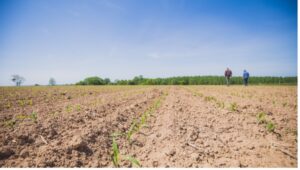
All over the world, crops are facing an increase in abiotic stresses, which affect their development, yields, and harvest quality.
According to the FAO (2022), more than 50% of global yield losses are due to these abiotic stresses, far more than pathogens or nutritional deficiencies. The IPCC (2023) estimates that by 2050, extreme weather events could reduce yields by 17 to 22% in some Mediterranean regions. In Europe, the Copernicus program has shown that 2022 was the hottest year on record, with average losses of 10 to 20% for field crops in the south of the continent.
These phenomena are no longer exceptional: they are becoming permanent features. The frequency of agricultural heat waves has tripled since the 1980s. Areas that were once fertile are now facing:
- longer and earlier water deficits,
- increasing soil salinization linked to intensive irrigation or rising groundwater levels,
- extreme temperature fluctuations disrupting germination, flowering, and fruit set.
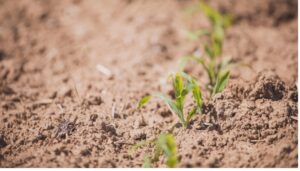
Faced with these upheavals, strengthening crop resilience is no longer an option but a priority. The challenge is not only to protect plants on an ad hoc basis, but to prepare them to activate their own defense mechanisms.
This is precisely what biostimulants do, by modulating plant physiology to increase their tolerance to stress.
Nature and mechanisms of abiotic stress
Abiotic stresses are all non-living environmental factors that harm plant growth, metabolism, or reproduction. There are generally four main categories:
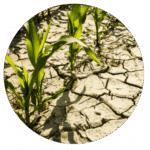
- Water stress – caused by a lack or excess of water, it disrupts osmotic balance, causes stomata to close, reduces photosynthesis, and limits nutrient absorption.
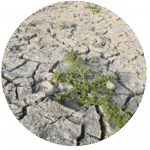
- Heat stress —whether from heat waves or frost—destabilizes enzymes, damages cell membranes, and disrupts hormone regulation.
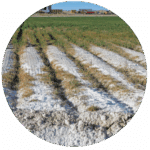
- Salt stress – linked to the accumulation of sodium (Na⁺) and chloride (Cl⁻) in the soil, it blocks water absorption and causes internal ionic imbalances.
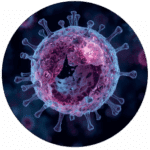
- Oxidative stress —often secondary to other types of stress—results in the overproduction of free radicals (ROS) that oxidize proteins, lipids, and DNA, accelerating cellular aging.
Acting alone or in combination, these stresses trigger a cascade of reactions. Stomatal closure reduces CO₂ uptake and thus photosynthesis. Many enzymes are inhibited, slowing down overall metabolism. Chloroplasts become disorganized, leading to a decrease in energy production. Cell membranes degrade, allowing ions to leak out and disrupting internal balance. Finally, senescence pathways may be activated prematurely, accelerating the decline of the plant.
The early and reproductive stages are particularly vulnerable. A heat wave lasting just three to five days during flowering can be enough to compromise fertilization and reduce yields by 70% in sensitive crops such as corn, tomatoes, and soybeans.
In this context, a plant's survival and performance depend largely on its ability to quickly activate its defense mechanisms, whether antioxidant, osmoregulatory, hormonal, or structural. The faster and more coordinated this response, the more resilient the plant is to climatic hazards.
Biostimulants: levers for crop adaptation
Biostimulants offer a wide range of mechanisms to help plants better withstand climatic hazards. Their effectiveness is based on a combination of complementary actions, ranging from immediate cellular protection to stimulation of regeneration after stress.
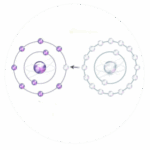
- Activation of the antioxidant system
Oxidative stress is one of the most common responses to abiotic stresses such as drought, heat, or salinity. It results in the accumulation of free radicals (ROS), which cause damage to membranes, proteins, and DNA.
Biostimulants rich in natural antioxidant compounds (polyphenols, flavonoids, organic acids, peptides) act in several ways:
- they stimulate the expression of genes encoding antioxidant enzymes (SOD, CAT, APX),
- they reduce lipid peroxidation and preserve membrane integrity,
- and they directly neutralize ROS thanks to their scavenging properties.
Thus, applying licorice extract (Glycyrrhiza glabra) to beans stressed by salinity increased chlorophyll content (+30%), reduced MDA (–45%, a marker of lipid oxidation), and improved biomass (Rady et al., 2018). Similarly, an aqueous extract of garlic (Allium sativum) applied to eggplants and peppers subjected to 38–40°C stimulated antioxidant activity and increased fruit production by 18% (Hayat et al., 2018). These results show that biostimulants can both limit damage and support productivity.
- Stimulation of osmoregulation
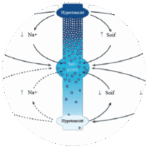
In cases of drought or salinity, internal osmotic pressure drops, threatening cell turgidity and enzyme activity. To cope with this, plants produce osmolytes such as proline, glycine betaine, or trehalose, which stabilize cell structures and retain water.
Biostimulants, particularly plant protein hydrolysates, reinforce this process. In corn, the application of a protein hydrolysate doubled proline accumulation and stabilized photosynthesis under heat stress conditions (Ertani et al., 2018). Similarly, white willow (Salix alba) extracts, rich in salicylic acid and flavonoids, have been shown to activate the GABA pathway, stimulate ABA biosynthesis, and maintain root growth under saline conditions (review 2024, PMC10967762).
- Hormonal regulation and phytohormonal rebalancing
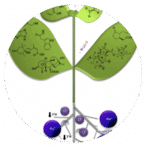
Abiotic stresses disrupt hormonal balance: they increase ethylene production (promoting senescence), reduce cytokinins (associated with active growth), and modulate ABA (key in stomatal closure).
Certain plant extracts, rich in triterpenic or phenolic acids, help restore this balance. This is the case with holy basil (Ocimum sanctum), an extract of which promoted ABA synthesis, enabling more precise regulation of stomatal closure and maintenance of primary metabolism under moderate water stress (Plant Growth Regulation, 2023).
For their part, certain microbial strains, such as Bacillus subtilis or Pseudomonas fluorescens, produce ACC deaminase, an enzyme that reduces ethylene production by breaking down its precursor. This action delays senescence and prolongs active growth. Trials on tomatoes and chickpeas have confirmed improved drought tolerance and a greater number of viable fruits (Backer et al., 2018).
- Optimized root development
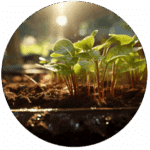
Root architecture plays a key role in accessing water and mineral resources. A plant with deeper, more branched roots is more resistant to periods of drought.
Humic acids, certain plant extracts rich in natural auxins or allantoin, and symbiotic microorganisms promote this development. For example, a humic extract applied to corn increased root biomass by 24% and exploration depth by 19% under drought conditions (Canellas et al., 2015). Similarly, comfrey extract (Symphytum officinale), rich in allantoin and rosmarinic acid, improved root biomass and leaf density in vegetable crops under moderate water stress (FranceAgriMer, 2022).

- Support for post-stress recovery
A plant's resilience depends not only on its resistance during stress, but also on its ability to quickly restart its vital functions after the critical episode.
Biostimulants rich in flavonoids, such as those derived from green tea (Camellia sinensis), play a major role here. A study on lettuce and peppers showed that they reduced membrane damage, boosted chlorophyll biosynthesis (+22%), and stimulated the expression of heat shock proteins (HSP70, HSP90), which are essential for repairing damaged proteins (Frontiers in Plant Science, 2022). This "revitalizing" capacity limits yield losses and stabilizes production quality.
Conclusion
In a context of climate instability, biostimulants are not a substitute for conventional agricultural practices, but rather a strategic lever for strengthening crop resilience. Their value lies in a preventive and adaptive approach that respects biological balances.
By activating the internal mechanisms of plants (antioxidants, osmoregulators, hormones, and structural mechanisms), biostimulants enable:
- significantly reduce yield losses,
- improve the quality and nutritional value of products,
- and ensure greater long-term resilience to climate hazards.
As part of an overall agronomic strategy, biostimulants are therefore essential allies for modern, productive, and sustainable agriculture.
Any questions?Contact us, our team is here to help.
Disclaimer
The aim of this series is to share practical information on biostimulants. Each month, a new topic will be covered, based on our expertise and research.