
Special Edition
The series you read every month is based on scientific and regulatory data. For this issue, we have chosen a special format: a philosophical essay. Because biostimulants are not merely agronomic solutions, but also a symbol of transition. They challenge our relationship with living organisms, technology, and responsibility. This text is a reflective interlude, complementing the more technical approaches presented in the other articles.
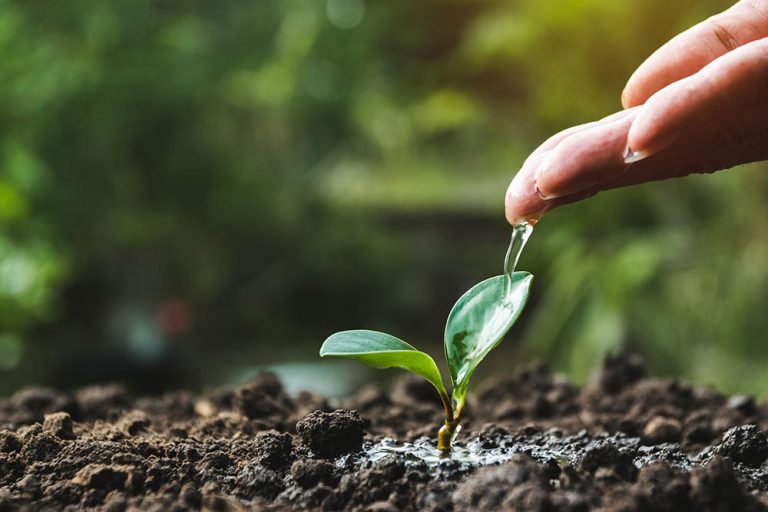
Since its inception, agriculture has been a dialogue between humans and plants. But this dialogue has not always been balanced. Over the centuries, humanity has sought to dominate the plant world: large-scale irrigation, mineral fertilizers, synthetic pesticides, heavy mechanization… all of these technical advances have made it possible to feed a growing population.
However, this productivity has led to systemic vulnerabilities: soil degradation, dependence on chemical inputs, loss of biodiversity, and increased vulnerability to climate-related hazards.
In this context, biostimulants stand out as a unique innovation. Unlike fertilizers, which directly supply nutrients, or pesticides, which destroy pests, they do not act externally but seek to activate the plant’s internal mechanisms. Their role is not to force, but to support. This approach—discreet yet radical—marks a break with the past: it embodies a different vision of agriculture, one based less on domination and more on cooperation with living organisms.
Dominate or support: two agricultural paradigms
The history of industrial agriculture could be summed up in a single word: correct. Correct a nutrient deficiency with fertilizer, correct an infestation with a pesticide, correct a deficiency with synthetic supplements. The plant is viewed as a machine: if it weakens, all that’s needed is to compensate from the outside.
Biostimulants represent a different paradigm. They view the plant not as a passive entity but as an organism equipped with survival strategies. Drought, heat, salinity: plants possess adaptive mechanisms—sometimes subtle, often underutilized. The role of biostimulants is to activate and amplify these mechanisms, empowering the plant to harness its resilience.
Philosophically speaking, this shift is profound. It challenges our relationship with living things: do we want to force them to yield immediate results, or support them to unlock their potential? In the first case, the plant is merely a tool for production; in the second, it becomes a partner.
The plant as a subject, not as an object
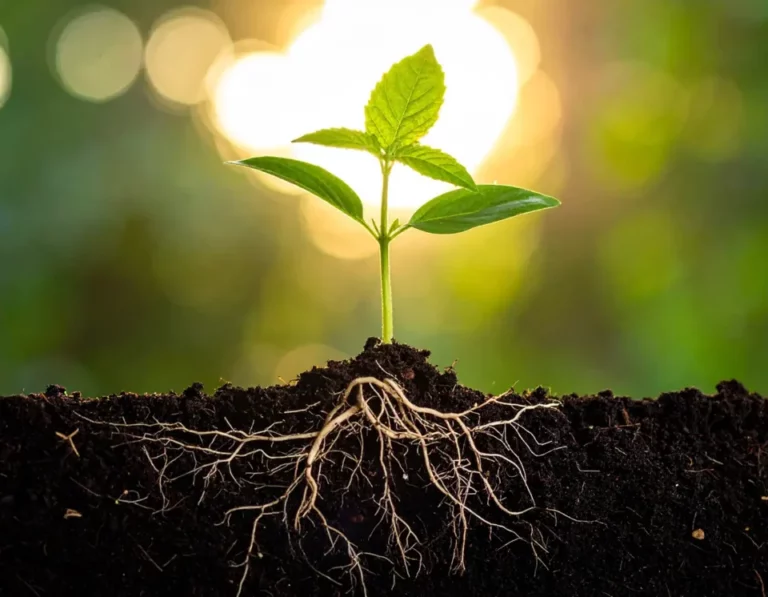
A strand of contemporary philosophy (from Bruno Latour to Baptiste Morizot) emphasizes the need to acknowledge that non-humans possess agency—the capacity to act. A plant is not merely a resource; it is a living being with its own dynamics.
In this sense, biostimulants reflect a physiological approach. They do not alter genetics or introduce lethal substances to combat pests, but rather tap into existing metabolic pathways: hormonal regulation, production of antioxidant enzymes, and root growth. In other words, they are based on the premise that the plant already possesses the keys to its survival. All that is needed is to unlock them.
This approach resonates with a philosophical intuition: respecting the distinct nature of living things. Rather than viewing plants as inert materials to be shaped, it involves recognizing their inherent dynamics and working in harmony with them. Biostimulants thus become a tool for partnership, not domination.
Responsible Agriculture
In *The Imperative of Responsibility* (1979), the philosopher Hans Jonas argued for an ethics focused on the future: our technological choices must be evaluated not only for their immediate effectiveness, but also for their consequences for future generations.
Chemical inputs have long been evaluated solely in the short term: do they increase yields? Do they protect the crop? Their impact on soil, water, human health, and biodiversity was recognized only belatedly—and sometimes too late.
By utilizing natural extracts, microorganisms, or biomolecules, biostimulants are part of an approach aimed at reducing our environmental footprint. They are not neutral—no technology is—but they seek to enhance the plant’s intrinsic capabilities rather than compensate for its deficiencies with artificial inputs. Here we see Jonas’s idea: a technology that doesn’t require us to rethink everything in ten years, but leaves room for the future.
Thus, using a biostimulant is not merely an agronomic decision; it is part of a vision of agriculture as a responsible activity that is mindful of its ecological and social impacts .
A New Humanism in Agriculture
Recognizing plants as partners does not diminish the farmer’s role. On the contrary, it requires a deeper level of expertise and a keen eye for developmental stages, physiological signals, and environmental conditions.

Farmers, who are already experts in the art of working with soil, climate, and crops, are seeing their role expand with the use of biostimulants. These tools do not replace their expertise, but rather enhance it. By incorporating them, farmers become more like strategists of life, capable of finely orchestrating the interactions between nutrition, abiotic stress, and physiological development.
Far from being a matter of mechanically applying inputs, his work relies on careful observation, informed foresight, and context-specific decision-making. This approach further highlights his agronomic expertise and his central role in the transition to sustainable agriculture.
This shift can be interpreted as a new form of agricultural humanism: humans are no longer the ones imposing their industrial logic on the natural world, but rather those who work in harmony with it, in a relationship built on listening and adaptation. It is a conception of technology not as a tool of domination, but as a bridge between humans and nature.
Biostimulants as a symbol of transition
Beyond their scientific effectiveness, biostimulants therefore carry symbolic significance. They represent the shift from extractive agriculture to regenerative agriculture, from a mindset of control to one of cooperation.
One could say that they are a sign of a paradigm shift:
- From a form of agriculture that viewed plants as mere food-producing machines to one that recognizes them as living partners.
- From a technique that filled in the gaps to one that unlocks potential.
- From a focus on short-term returns to a focus on long-term resilience.
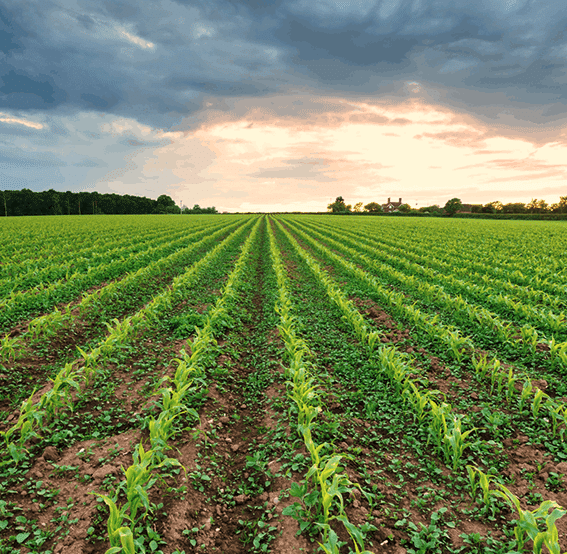
Of course, they are not a magic bullet. Their effectiveness depends on the context, the quality of the products, and the scientific rigor behind them. But their philosophical value lies in reminding us that agriculture is not just about productivity: it is a relationship with living things, and that relationship can evolve.
Conclusion
Biostimulants are not merely an agronomic innovation; they are also a philosophical choice. By choosing to use them, we are choosing to foster a more respectful relationship between agriculture and plants and ecosystems.
They embody a vision of technology that does not seek to replace nature, but to work alongside it. A technology that recognizes that living organisms already hold the solutions, and that sometimes all we need to do is help them bring those solutions to fruition.
In this sense, biostimulants help bridge the gap: between humans and plants, between performance and sustainability, between technology and ethics. They may be less spectacular than past revolutions, but their strength lies in opening up a new path—quiet yet profound—where agriculture ceases to be a battle against nature and becomes a partnership with it.
Any questions? Contact us, our team is here to help.
Disclaimer
The aim of this series is to share practical information on biostimulants. Each month, a new topic will be covered, based on our expertise and research.